Author name: RukeRee

Stock Market Updates

AI’s Energy Paradox: Why a Power-Hungry Technology Can Help the World Use Less Power

AI’s Energy Paradox: Why a Power-Hungry Technology Can Help the World Use Less Power

Artificial intelligence undeniably consumes a lot of electricity. Yet, when deployed with intent, it can also be the very instrument that trims energy waste across transportation, buildings, heavy industry, and even nature-based carbon sinks—more than offsetting its own footprint.

Illustration of AI optimizing energy flows across transport, buildings, and nature

Illustration: AI-managed smart city with transport, buildings, and renewable energy working together.

Executive Summary

  • Yes, AI is power-intensive—data centers draw large loads and generate associated emissions.
  • But AI also cuts waste at scale: dynamic routing for trucks, planes, and ships; algorithmic building controls; accelerated discovery of greener materials; and precision stewardship of forests and soils.
  • Transportation savings: 5–15% in freight; 3–10% in aviation; 20% fuel cut in shipping through slow steaming.
  • Buildings: AI-driven HVAC, lighting, elevators, shading, and battery optimization could cut 8–19% of emissions by 2050.
  • Materials & circularity: AI speeds up low-carbon material discovery and recycling processes.
  • Nature: smarter forest and soil monitoring strengthen carbon sinks.
  • Net balance: Savings can exceed AI’s own energy demand by 2035.

1) The Paradox

AI consumes massive amounts of electricity. But it also excels at optimization—predicting demand, orchestrating systems, and cutting waste. When applied to energy-intensive industries, the cumulative savings can outweigh AI’s own footprint.

2) Transportation: Smarter Miles

Ground Freight

Dynamic routing saves 5–10% fuel today and could cut 10–15% industry-wide. In 2022, U.S. drivers wasted 3.3 billion gallons of fuel sitting in traffic.

Aviation

Airlines save 3–10% annually with AI-adjusted routes, speeds, and altitudes that exploit tailwinds and minimize turbulence.

Maritime Shipping

AI enables “slow steaming,” where a 10% speed cut reduces fuel by 20%. It also schedules port arrivals to avoid burning 7–10 tons of fuel per day while anchored.

IEA estimates: transport-sector AI could cut 900 million metric tons of CO₂ by 2035, far surpassing projected data-center emissions.

3) Buildings: Algorithms as Facility Managers

Buildings account for nearly 40% of global emissions. AI-driven HVAC, lighting, shading, and elevator scheduling can reduce operational emissions by 8–19% by 2050. AI also optimizes batteries: charging at low-cost hours and discharging during peak demand, cutting reliance on fossil peaker plants.

4) Materials & Manufacturing

AI accelerates discovery of low-carbon alternatives for cement, steel, and plastics. It also enhances recycling—identifying scrap, blending materials, and substituting biodegradable options. Every ton of recycled material displaces energy-intensive virgin production.

5) Nature, Augmented

Forests and soils absorb carbon, and AI can enhance their effectiveness. Satellite and drone monitoring pinpoints where reforestation is most impactful. AI detects pests early, and models soil health to improve natural carbon storage. U.S. forest offsets already equal ~204 million metric tons of CO₂; smarter AI targeting can improve scale and credibility.

6) Balancing the Ledger

By 2035, AI-enabled efficiencies could cut over 1 gigaton of CO₂ annually. Data centers may emit 300–500 million tons, but AI’s role in transport, buildings, materials, and land use ensures net positive climate impact if deployed responsibly.

7) Risks & Guardrails

  • Privacy: occupancy tracking needs consent and anonymization.
  • Rebound Effect: efficiency must not lead to higher overall consumption.
  • Fairness: routing and building management must avoid bias.
  • Security: resilient safeguards are critical for AI-controlled infrastructure.

8) Monday Morning Playbook

  1. Map top energy drains.
  2. Pilot AI optimization (e.g., routing or HVAC).
  3. Measure savings in absolute energy and emissions.
  4. Standardize and scale successful pilots.
  5. Integrate grid carbon-intensity data into AI systems.
  6. Report AI’s net balance—energy consumed vs saved.

Conclusion

AI consumes power, but it can save more than it uses. By optimizing transportation, buildings, materials, and carbon sinks, AI can pay its own electric bill and become a key ally in cutting global emissions.
Stock Market Updates

Markets Catch Their Breath as the Fed Takes Center Stage

Markets Catch Their Breath as the Fed Takes Center Stage

Stocks paused just shy of all-time highs while the Federal Reserve opened its September meeting. Traders largely expect a quarter-point cut on Wednesday, but the dot plot and Chair Powell’s tone will set the real tone for risk assets into quarter-end.

Executive Brief

  • Pause, not panic: The S&P 500 and Nasdaq each slipped ~0.1%, ending the Nasdaq’s six-day streak; the Dow fell 0.3% (~126 pts). Ten-year yields held near 4.03%.
  • Cut expected, details matter: Markets are pricing a 25 bps move. The distribution of dots (how many cuts are penciled for year-end) and Powell’s guidance on growth, labor, and balance-sheet runoff will do most of the market-moving.
  • Consumer still carrying the load: August retail sales beat, cushioning labor-market softening and supporting the “soft-landing” narrative.
  • Sector split: Energy led (+1.7%) on higher crude as Ukraine struck Russian refining capacity; Utilities lagged. Gold notched a fresh record above $3,688/oz.
  • Policy subplot: A late-Monday appeals-court decision blocked President Trump from removing Governor Lisa Cook, clearing her to vote this week—an unusual twist that adds attention to the dots.

U.S. stock indexes, past three sessions

Sept. 12 Sept. 15 Sept. 16
Source: FactSet (figure recreated)
Nasdaq composite
S&P 500
Dow industrials
As of Sept. 16, 4 p.m. ET (recreated from article data).

Why the Pause Makes Sense

Equities have run hard into the meeting, propelled by the expectation that rate relief will support a second-half reacceleration and keep credit conditions benign. When benchmarks sit within touching distance of records, a modest stall is normal: portfolio managers reduce gross exposure, options dealers hedge, and short-term traders fade the pre-event optimism. That “waiting game” was evident Tuesday. The three major indexes finished narrowly lower, but breadth was mixed rather than negative, and rates markets barely budged—suggesting positioning, not a macro rethink, drove price action.

The macro tape still argues for resilience. Retail sales surprised to the upside even as parts of the labor market cool, sustaining the narrative that households retain enough firepower to carry growth through the winter. Bank of America’s monthly fund manager survey echoed that tone: fears of a tariff-driven recession have faded notably since spring, and risk appetite is at its strongest since February. Meanwhile, the NAHB/Wells Fargo index showed home-builder confidence holding steady; with cuts likely, sales expectations picked up as mortgage-rate relief creeps into the outlook.

The Fed’s Two Levers: Rate Path and Message

A 25 bp cut is the base case. But the shape of the dots will be decisive. If the median now implies multiple reductions by year-end, equities could interpret that as “insurance easing” with little growth scare attached. If, instead, the dot distribution narrows to one and done, the market will test whether the summer’s rally over-anticipated relief. Powell’s press conference will matter as much as the dots. Expect questions on how the Committee balances a more moderate labor market with sticky areas of inflation, whether the balance-sheet runoff pace will evolve, and how the Fed views risks from oil and geopolitics.

The governance subplot adds a wrinkle. By blocking an attempt to remove Governor Lisa Cook on the eve of the decision, an appeals court kept the Committee’s current composition intact. That likely reduces uncertainty about the dots themselves and avoids a late change in voting dynamics, but it also highlights how politicized the policy backdrop has become—a factor markets can’t fully quantify.

Under the Hood: Sectors and Commodities

Energy rallied 1.7% to lead the S&P 500 as crude oil rose on reports of Ukrainian strikes against Russian refineries—activity that tightens refined-product supply and nudges risk premia higher. Occidental Petroleum jumped roughly 5%, emblematic of the bid into U.S. integrateds and E&Ps. On the flip side, rate-sensitive Utilities underperformed into the policy event, a familiar pattern when the market tilts toward cyclical strength and away from bond-proxies.

The corporate rumor mill cooled a bit: Paramount Skydance and Warner Bros. Discovery gave back part of last week’s gains after the pop on potential deal chatter. Meanwhile, gold blasted to a fresh record above $3,688/oz. With real yields contained and policy risk in focus, the metal’s 40% year-to-date surge (on pace for its best year since 1979) shows investors still want a portfolio hedge even as equities hover near highs.

Positioning Playbook

  • Into the decision: Expect choppy, headline-driven moves. If dots imply “more cuts, less fear,” growth and duration-friendly assets (quality tech, bond-proxies) can re-lead. A hawkish surprise likely rotates leadership toward Energy/Financials with a mild valuation check in long-duration tech.
  • Watch the long end: A stable 10-year near 4% keeps equity valuations supported. A rates drift higher post-Powell (toward 4.25%) would pressure high-multiple names and push factor leadership toward profitability and cash-flows.
  • Risk control: With indexes near peaks, options hedges are inexpensive relative to realized vol. Consider partial collars around earnings dates and key macro prints.

What to Watch Next

  1. Dot plot dispersion: Count how many Committee members signal two or more 2025 cuts—breadth matters as much as the median.
  2. Powell on labor: Any acknowledgment of sustained cooling without recession talk supports the soft-landing trade.
  3. Oil and gold: Continued strength extends the “risk-on with hedges” regime and could eventually complicate the Fed’s inflation calculus.
Stock Market Updates

Musk Buys $1B of Tesla: Signal of Commitment as Board Preps Mega Pay Plan

Musk Buys $1B of Tesla: Signal of Commitment as Board Preps Mega Pay Plan

Elon Musk’s first open-market purchase since 2020—~2.5M shares via trust—lifted Tesla on Monday and reframed the debate over his control, compensation, and the robotaxi/AI pivot.

Executive Brief

  • What happened: Musk bought ~$1B in Tesla stock Friday (disclosed Monday), his first open-market buy since Feb 2020. Shares rose ~3.6% to ~$410.
  • Why now: The board is teeing up a shareholder vote on a new package that could ultimately grant Musk up to ~12% more equity over time if milestones hit.
  • Strategy read-through: Purchase reinforces Musk’s push to evolve Tesla from EV leader to AI + robotics platform (robotaxi, Optimus) and to regain ~25% voting heft.

Tesla Weekly Share Price — Five Years

Approximate visual of TSLA’s five-year weekly path with notable swings and recent rebound toward $400+. $400 $300 $200 $100 ’21 ’23 ’25 Source: FactSet

Note: Schematic chart for editorial illustration; not an exact plot.

What’s New

The buy follows years of net selling (~$39B since late 2021, including funding the Twitter/X deal). Musk’s current effective stake is ~20% (incl. options under dispute), and a November vote could add up to ~12% contingent on aggressive value/operational hurdles. His public comments continue to frame Tesla’s future around autonomy and humanoid robotics rather than pure EV volumes.

Why It Matters

  • Signal value: Insider buying at scale typically strengthens investor confidence, especially ahead of a pivotal compensation vote.
  • Control trajectory: Moving closer to ~25% ownership supports Musk’s argument for influence over Tesla’s AI roadmap.
  • Narrative pivot: Reinforces the “software/AI multiple” despite near-term earnings pressure (Q1 profit −71%, Q2 −16%).

Valuation & Risk Checks

  • Rich multiple: Shares trade at ~176× forward EPS—fans cite optionality (robotaxi/Optimus); skeptics point to execution and policy cliffs.
  • Policy overhang: U.S. EV incentives rolling off could mean “a few rough quarters,” per Musk.
  • Reputational/political noise: Prior political controversies weighed on brand and demand; insider buy may help reset focus.

What to Watch Next

  1. Shareholder vote outcome on the new compensation plan.
  2. Robotaxi milestones: regulatory pilots and commercial timelines.
  3. Optimus updates: progress toward commercial deployment.
  4. Margins: balancing EV volume, pricing, and FSD/software contributions.
Monday Close
~$410.26
6-Month Performance
~+60%
Forward P/E (est.)
~176×
Stock Market Updates

U.S. and China Outline TikTok Framework as Leaders Prepare Confirmation Call

U.S. and China Outline TikTok Framework as Leaders Prepare Confirmation Call

After two days of talks in Madrid, negotiators say they have a framework that would keep TikTok operating in the U.S. The outline awaits a call between President Trump and President Xi and comes as Beijing pushes for a Trump visit and escalates scrutiny of a major U.S. chip maker.

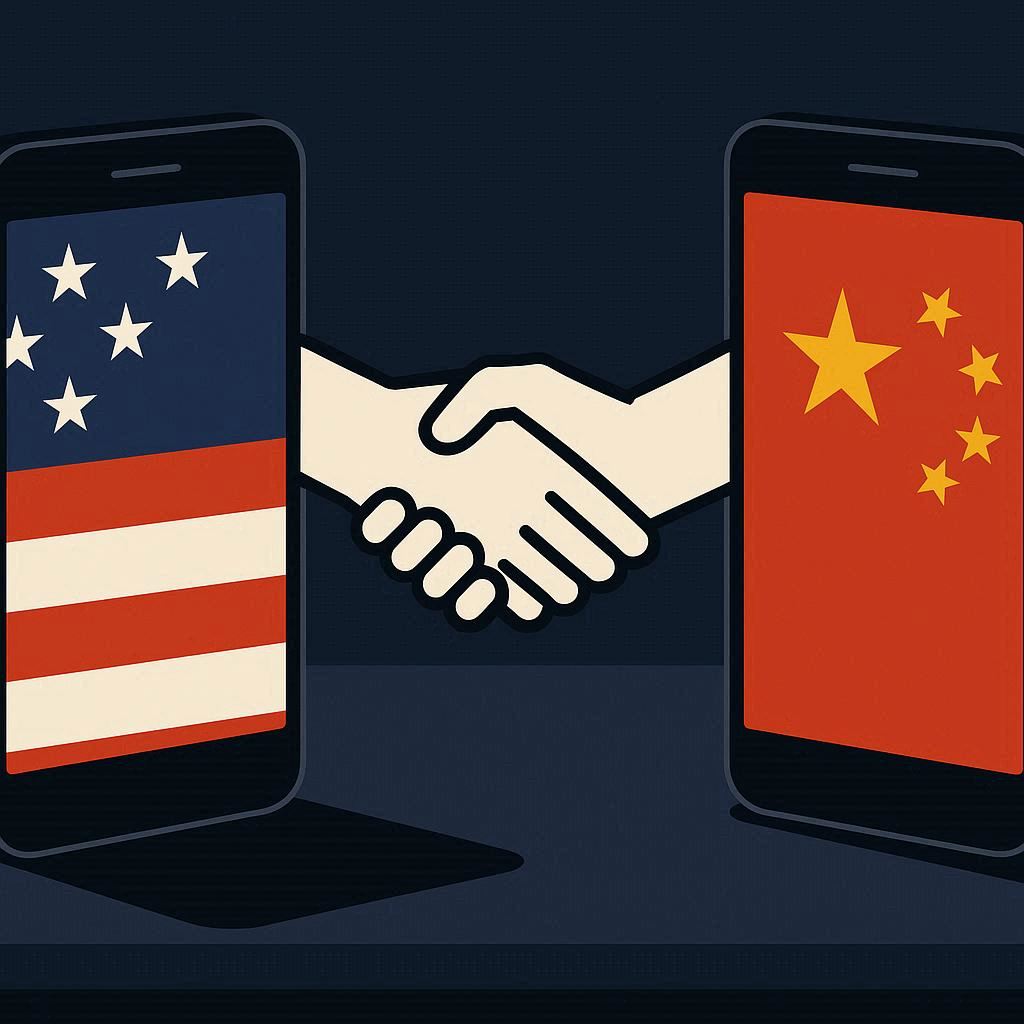
Concept illustration of U.S.–China negotiators agreeing on a framework for a social video app; two phones bridging national colors.

Executive Brief

  • Framework reached: U.S. and Chinese teams agreed on a structure to keep TikTok operating in America, pending a leaders’ call.
  • Ownership shift: The plan centers on transferring ownership to an investor consortium; detailed commercial terms remain private.
  • Algorithm question: It is unclear whether China will permit divestment or licensing of TikTok’s recommendation algorithm, which sits on Beijing’s export-control list.
  • Beijing’s calculus: Sources tie China’s new flexibility to its effort to secure a Trump visit; regulators also announced a probe of a leading U.S. chip firm during the talks.
  • Deadline stance: Officials indicated they do not intend to grant repetitive extensions; time will be provided to finalize paperwork under the agreed outline.

What Happened

Treasury Secretary Scott Bessent said a framework is in place and that the presidents plan to confirm it on Friday. Negotiators described the Madrid sessions as candid and detailed, with meetings running late Sunday and about six hours on Monday. Chinese representatives publicly characterized the talks as constructive and said the framework resolves key TikTok issues in principle.

Deal Outline & Open Items

  • Ownership change: A consortium would take a significant stake in TikTok to satisfy U.S. national-security requirements.
  • Participants: Blackstone is no longer expected to join, according to people familiar; Oracle remains relevant due to its existing data-hosting role.
  • Data controls: Governance, auditing, and localization requirements are expected to mirror an April concept reviewed by U.S. officials.
  • Algorithm: Still unresolved—transfer, license, or technical workaround must comply with China’s export rules.
  • Timeline: Company receives time to document terms under the framework rather than seek further deadline extensions.

Context & Dynamics

  • Shift from resistance: Beijing had resisted a sale of ByteDance’s controlling stake; flexibility emerged alongside efforts to secure a high-profile U.S. visit.
  • Parallel pressure: China’s antitrust authority announced a preliminary finding against a U.S. chip company tied to a 2020 acquisition—seen by some as political cover at home.
  • Broader agenda: The framework sits within wider negotiations on tariffs, fentanyl precursors, and agricultural purchases that remain unsettled.

Political Backstory

The administration signaled in January it would not enforce an immediate shutdown while talks proceeded, even as national-security concerns persisted. Advisers encouraged outreach to younger audiences on short-form platforms during the election cycle, and the White House launched an official TikTok account last month.

What to Watch Next

  1. Leaders’ call confirming the framework and authorizing legal drafting.
  2. Public details on governance, auditing, and data-localization safeguards.
  3. Final treatment of the recommendation algorithm under export-control rules.
  4. Whether progress on TikTok unlocks scheduling for a Trump–Xi summit and movement on tariffs or fentanyl-related talks.
Methods note: This retelling paraphrases the provided text and presents claims as described by officials and sources. Independent verification is not asserted here.
Stock Insights (KR)

Sep, 14 2025 The Wall Street Journal

트럼프, 네타냐후·푸틴 압박 주저… 美 영향력 약화 우려

주요 내용 요약:


트럼프의 딜레마

  • 스스로를 “평화 중재자”로 포장하지만, 실제로는 동맹·적국 모두에게 레버리지를 적극 사용하지 않음

  • 가자·우크라이나 두 전선 모두에서 미온적 대응 → 美 영향력 약화 지적

최근 사건

  • 이스라엘: 카타르서 하마스 인사 대상 미사일 공격 → 美 기습적으로 뒤늦게 파악, 인질 위험 증대

  • 러시아: 알래스카 회담 직후 우크라 공격 강화, NATO 최초로 폴란드 상공 러시아 드론 격추

트럼프 반응

  • 러시아의 폴란드 영공 침범에 모호한 SNS 발언, 제재는 ‘조건부’로 지연

  • NATO는 방위력 증강 중이지만, 美의 직접적 군사 지원은 부재

이스라엘 관련

  • 미국의 연간 군사지원은 약 30억 달러

  • 무기 지원 조건화 등 압박 수단 있음에도, 네타냐후와의 우호적 통화에 집중

  • 가자 인도적 위기와 인질 위협에도 하마스 비난 → 이스라엘과의 대립 회피

비판 & 함의

  • 전문가들: 美가 주도권 상실, 네타냐후·푸틴이 전쟁 속도를 결정하도록 방치

  • 푸틴: 우크라 전쟁을 역사적 사명으로 간주 → 개인적 외교로는 제어 불가

  • 네타냐후: 트럼프와의 긴밀한 관계를 활용, 군사 작전 정당화

제재·군사 정책의 불균형

  • 인도는 압박했지만, 러시아 최대 석유 구매국인 중국은 제재 회피

  • 우크라이나에 공격적 무기 지원 거부, 동맹국들과 차별

  • 공화당 내 린지 그레이엄 상원 의원 등 강경 제재 요구

핵심 결론

  • 트럼프는 “개인적 관계 유지”를 우선하지만,

  • 이로 인해 가자·우크라이나 두 전선에서 워싱턴의 영향력이 축소되고,

  • 장기적으로 美 동맹 신뢰·억지력 약화 우려

📌이 글은 WSJ 기사의 핵심 내용을 바탕으로 작성된 요약이며, 전체 기사는 WSJ 웹사이트에서 확인할 수 있습니다.

📌AI 관련 뉴스 해석법 및 투자 전략 가이드Beginner Guide to AI Investing

Stock Market Updates

Trump’s Hesitation With Netanyahu and Putin Erodes U.S. Leverage

Trump’s Hesitation With Netanyahu and Putin Erodes U.S. Leverage

Despite vast influence over Israel and Russia, President Trump has hesitated to use American power, raising concerns about Washington’s role in Gaza and Ukraine.

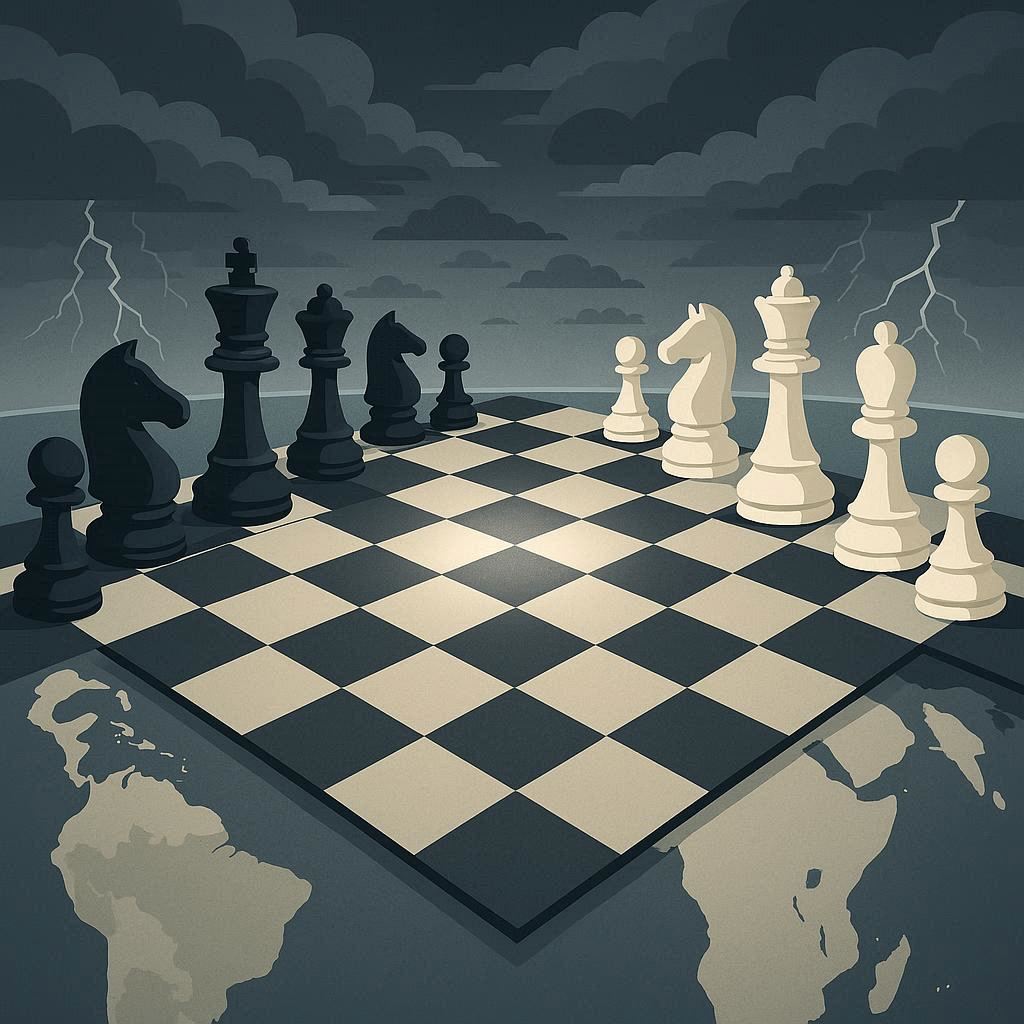
Geopolitical illustration

Executive Brief

  • Paradox: Trump frames himself as a peacemaker but has avoided applying direct leverage in Gaza and Ukraine—the two conflicts he most often vows to end.
  • Israel: Netanyahu proceeded with strikes in Qatar that blindsided Washington, even as hostages remain in jeopardy.
  • Russia: After meeting Trump, Putin escalated drone attacks, including incursions over NATO airspace in Poland.
  • Response: Trump’s reactions have been muted—vague social posts, new sanction “conditions,” and minimal U.S. reinforcement to NATO allies.
  • Risk: Analysts warn that passivity diminishes U.S. credibility and empowers adversaries and allies to act unilaterally.

Leverage Washington Isn’t Using

The U.S. equips Israel with over $3 billion annually, providing significant influence that could be exercised by slowing deliveries or conditioning usage. Similarly, Trump could escalate sanctions against Russia’s energy sector but has instead introduced prerequisites critics call delay tactics.

  • Israel front: Netanyahu cultivates Trump with flattery, limiting U.S. pushback even as humanitarian crises worsen in Gaza.
  • Russia front: Sanctions enforcement is inconsistent—India pressured, China spared—while U.S. arms to Kyiv remain restricted compared with allies.

Strategic & Political Fallout

  • NATO cohesion: European members stepped up air defenses after drone incursions, but no new U.S. assets were committed.
  • Domestic optics: Trump positions the wars as “Biden’s and Zelenskyy’s” while maintaining personal ties with Netanyahu and Putin.
  • Critic view: Experts argue Trump is surrendering leverage, allowing others to set conflict tempo, undermining America’s global standing.

What to Watch Next

  1. Whether Trump conditions future military support to Israel as Gaza operations escalate.
  2. Congressional pressure on the administration to toughen sanctions on Russia’s energy sector.
  3. NATO’s evolving eastern-flank deployments and whether the U.S. joins in stronger deterrence measures.
Note: This retelling synthesizes reporting from U.S. officials, foreign-policy experts, and allied responses. Events continue to develop across both fronts.
Scroll to Top